
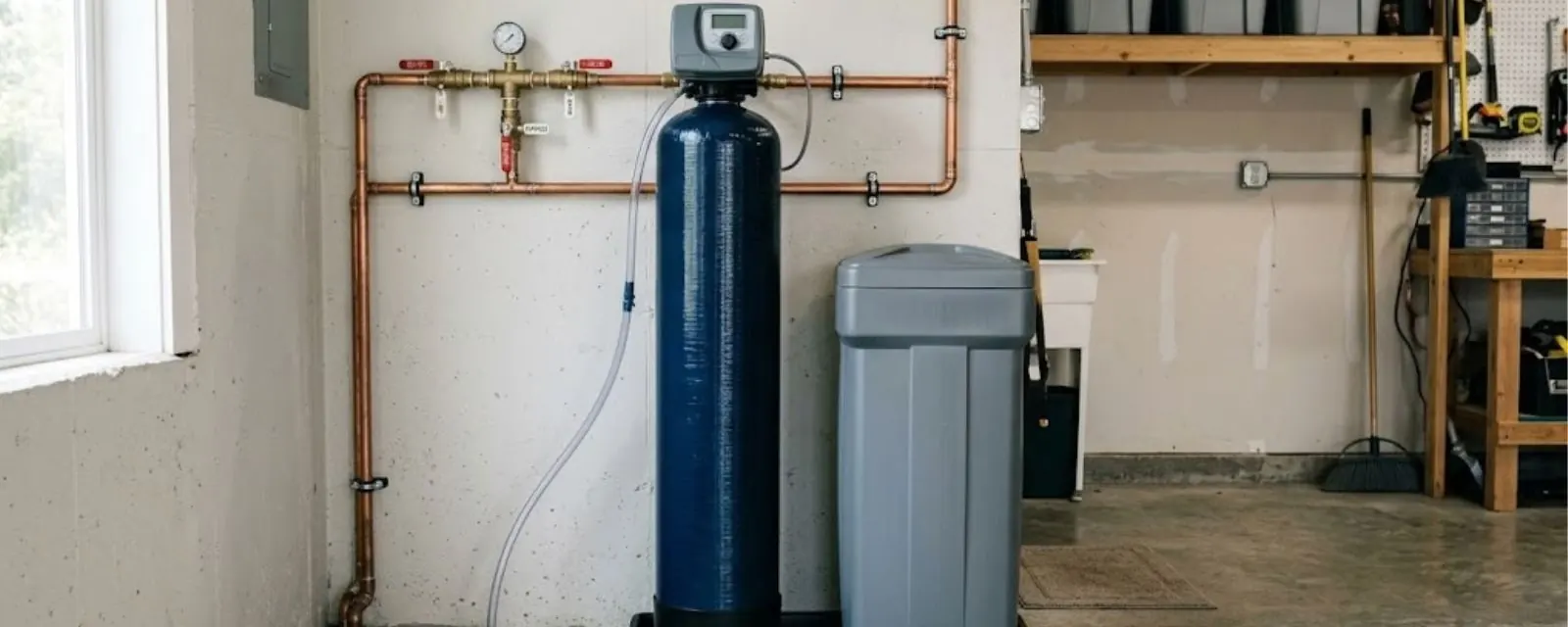
Test first, buy second
The City of Huntsville's 2025 water quality report does not give a hardness figure, so test your own tap or ask the utility for its numbers. Hardness is measured in grains per gallon or mg/L, and a basic test strip or lab test gives the answer.
If your water is soft, a softener will not help. If it is hard, a softener protects water heaters, faucets and appliances from scale. If your complaint is taste, a carbon filter may be all you need.
Chloramine in Huntsville water
The City of Huntsville's 2025 report lists chloramines as the disinfectant, averaging 3.09 mg/L across the year with a range of 1.12 to 3.92 mg/L. Chloramine is a chlorine and ammonia compound used because it lasts longer in pipes. Ordinary carbon filters work on free chlorine more easily than on chloramine, so look for a filter rated for chloramine.
Chloramine can also wear rubber parts, which affects toilet flappers and some appliance seals. That is one reason a toilet repair often involves a flapper. We do not make health claims about water, so ask your physician about health questions and the city about the report.
Softeners, filters and reverse osmosis
| System | Does | Does not |
|---|---|---|
| Salt-based softener | Removes hardness minerals | Remove chloramine or most contaminants. |
| Carbon filter | Reduces taste and odor | Soften water. |
| Reverse osmosis at one tap | Reduces many dissolved solids | Treat the whole house. |
| Whole-house sediment filter | Catches sand and grit | Soften or remove taste. |
Wells and private systems
Homes outside city water may use private wells, where water quality varies by location and well depth. A lab test is the right first step. Do not buy equipment before you know what is in the water. For work on supply lines tied to a treatment system, see plumbing installation.
Questions to ask before buying equipment
A salesperson who cannot tie the equipment to a test result is selling a product, not a solution.
- Which test result is this equipment solving.
- What are the ongoing costs for salt and filters.
- Will the system need a drain and a power outlet nearby.
- How is it serviced and by whom.
- What happens if the unit fails.
Installation and service
- Test results are reviewed and the right equipment is chosen.
- A bypass valve and drain are installed and the unit is plumbed in.
- The unit is set to match your hardness and household size.
- The plumber explains salt refills or filter changes and when to service it.
Salt, brine and the drain
A salt softener flushes brine to a drain every few days. That discharge needs a proper air gap and a place to go. Homes on septic systems should ask the installer and the septic service provider whether the brine is acceptable. Potassium salts are an option for some, at a higher cost.
What treatment pricing depends on
Water treatment is not covered by insurance. Call for a price after you test your water.
A softener's drain needs an air gap, a requirement found in the International Plumbing Code (IPC) that the City of Huntsville lists at its 2024 edition.
Water treatment questions
It depends on your hardness. The City report does not list a figure, so test your tap or ask the utility.
No. A softener removes hardness minerals. A chloramine-rated carbon filter addresses taste and odor.
A plumber can test hardness on site. For a full lab analysis use a certified lab.
Salt brine discharge is a concern for some septic systems. Ask the plumber about your system.
Treatment work is scheduled. For a leak, call the 24/7 line.