
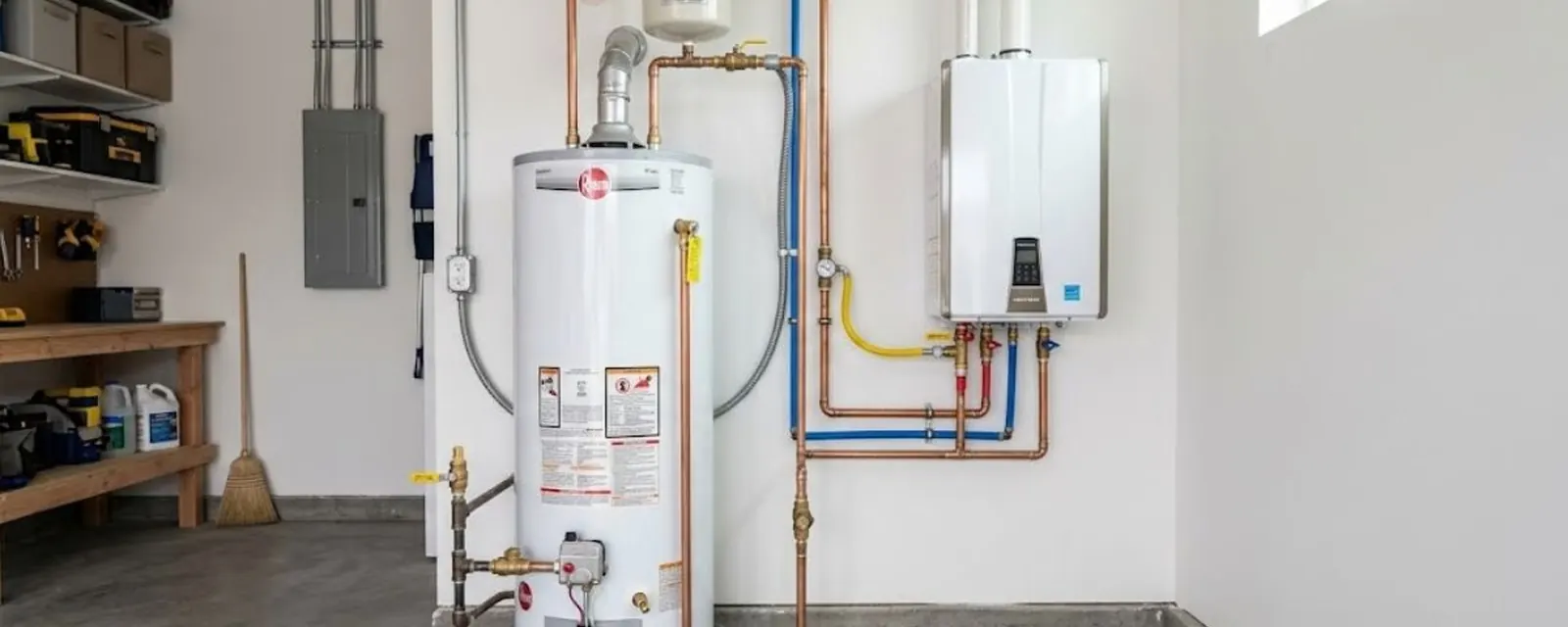
Choosing size and fuel type
Capacity should match the household. A tank that is too small runs out. A tank that is too large wastes energy keeping water hot. Rated first-hour delivery on the label is a better measure than tank volume alone.
Gas units heat faster and cost less to run in many homes, but they need venting and a gas line. Electric units need a dedicated circuit but no venting. Heat pump and tankless options change the numbers again, and our tankless water heater page compares them.
What to do before an installation visit
- Clear a path to the heater location.
- Know where the main shutoff and gas valve are.
- Switch off the old heater's power or gas if it is being removed.
- Do not store anything flammable near the heater.
- Plan for a short water outage.
New construction and remodel installs
On new construction the City of Huntsville requires a permit for new plumbing systems and inspects pier, foundation and ground plumbing, plumbing top-out and final plumbing. A water heater installed during new construction falls into that sequence, so the plumber coordinates timing with the inspector.
Remodels that move a water heater to a new closet or garage need new supply lines and sometimes new venting. Ask the plumber to mark where each line will run before the walls close. See plumbing installation for related work.
Installation steps
- Review the location, venting path and electrical or gas supply and confirm the unit that fits.
- Set the pan, drain and platform, then place and level the heater.
- Connect water lines with shutoff valves and a union, then add the relief valve and discharge pipe.
- Connect gas or power, vent a gas unit to code and fill and test the system before the final check.
Placement, venting and clearances
Gas heaters need combustion air and a vent that slopes properly to the outdoors. Garage installs need the burner raised above the floor in many codes, and the plumber should check that. Electric units need clearance for service and a pan with a drain in tight spaces.
A heater in an attic can cause serious water damage if it fails, so a pan with a drain line and a leak sensor are good choices there. The plumber can flag these risks in a planned visit.
Tank, tankless and heat pump compared
| Type | Strength | Consider |
|---|---|---|
| Tank, gas | Quick recovery, lower running cost | Needs venting and gas line. |
| Tank, electric | Simple install, no venting | Needs a dedicated circuit. |
| Tankless | Endless hot water, compact | Gas line size, descaling, higher install cost. |
| Heat pump hybrid | Lower electric use | Needs space and air flow. |
What goes into an installation price
Installation is not an insurance claim, though a failed older heater may be. Call for a price, and have the room measured or photographed.
Placement, venting clearances and the relief line on a new heater follow the International Plumbing Code (IPC), the code the City of Huntsville lists at its 2024 edition.
Water heater installation questions
Planned installations are scheduled in advance. For a failed heater, our 24/7 line dispatches a replacement crew.
The City requires permits for new plumbing systems. Ask the Huntsville permit office whether your install qualifies, and your plumber will handle it.
A like-for-like tank install often takes a few hours. New venting, gas or electrical work extends it.
A common rule is a tank sized to the household's peak hour demand. The plumber reads your usage and recommends a size.
Many codes require one where leaks could cause damage. A pan with a drain line is a good idea in attics and closets.