
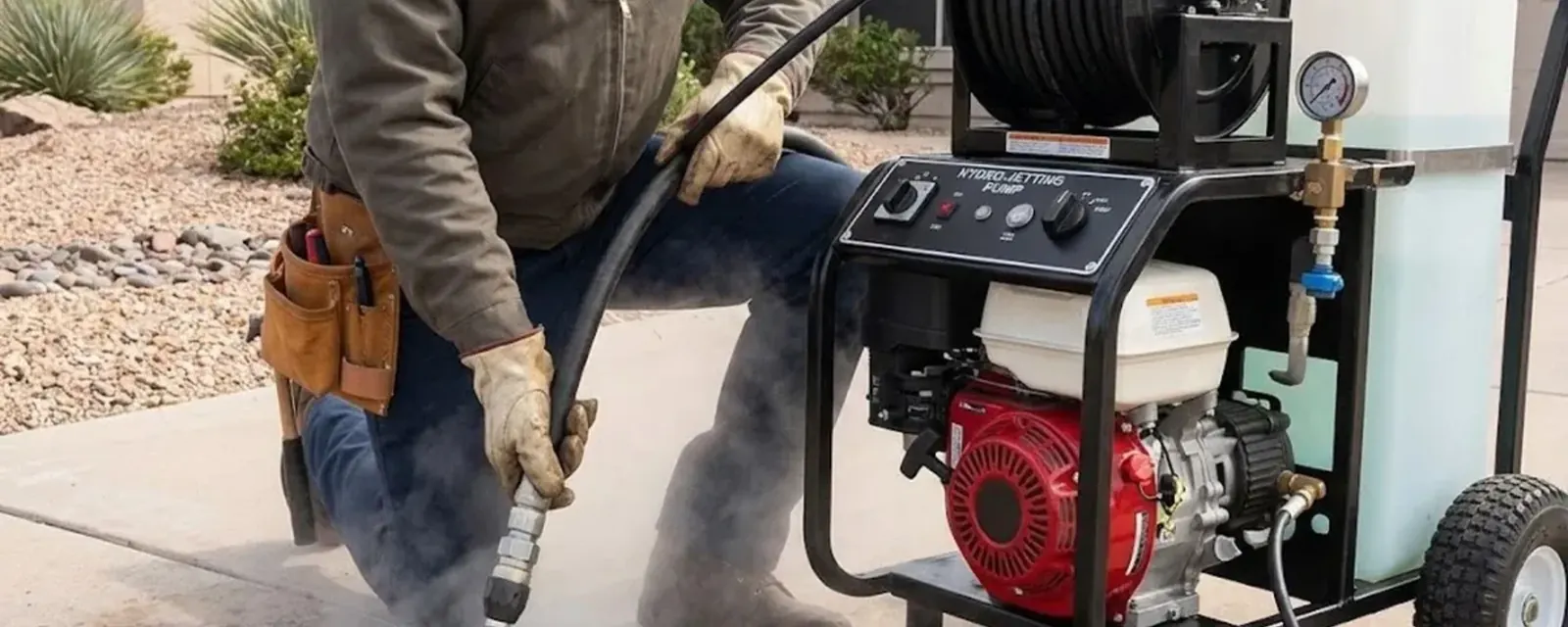
When a backup calls for jetting
A cable machine cuts a channel through a stoppage. If the pipe wall remains coated, the channel narrows again within weeks. Jetting washes the wall itself, which is why it suits repeat clogs, heavy grease and root-filled lines.
Call right away when a cable has stalled, when a line has been cleared more than once in a few months or when a restaurant or rental needs a line open before service. For one-time blockages, drain cleaning with a cable is usually enough.
- A cable got stuck partway down a line.
- Drain clogs again within weeks of cleaning.
- Grease buildup in a kitchen or commercial line.
- Root hairs in a camera recording that a cable did not remove.
How jetting works
- The plumber runs a camera first to see the pipe and avoid jetting a broken line.
- A hose with a forward and backward spray nozzle goes into the cleanout under controlled pressure.
- Water pulls the nozzle forward while the spray scours the pipe wall and pushes debris toward the main.
- A second camera pass confirms the wall is clean and shows any damage the jetting uncovered.
Jetting is not right for every pipe
A cracked, collapsed or heavily corroded pipe can be damaged by high pressure water. That is why the camera comes first. If footage shows a failing pipe, the plumber will recommend repair under sewer line repair rather than jetting.
Older clay and cast iron lines need lower pressure and a careful plumber, and some drain materials should not be jetted at all. Ask which pressure and nozzle will be used on your line.
Jetting for restaurants and rentals
A commercial kitchen sends fat down the line all day, and a cable clears it only briefly. Jetting is how many restaurants keep floor drains and grease lines flowing between pumping visits. Landlords use it for repeat blockages that tenants report every few months.
If you run a business in Huntsville, our commercial plumbing page explains after-hours dispatch.
Before and after: what to expect
Before jetting, a plumber usually runs a camera to see the pipe, since jetting is not right for every line. Cracked or collapsed pipe can be damaged by high pressure. After jetting, a second camera pass shows the pipe wall and confirms the cleaning worked.
Expect some noise and water flow during the work. The plumber sets up at a cleanout, so the work is mostly outside the house.
Jetting versus snaking
| Cable snaking | Hydro jetting | |
|---|---|---|
| Best for | One-time clogs | Repeat clogs, grease, roots. |
| What it removes | Cuts through the blockage | Scours the pipe wall. |
| Risk | Low | Needs a sound pipe. |
| Cost | Lower | Higher. |
Reading a hydro jetting quote
Jetting is usually considered maintenance by insurers, though sudden backup damage may be covered. Ask your agent. For a price on your line, call the dispatcher.
Jetting is done through an accessible cleanout, the kind of access the International Plumbing Code (IPC) calls for and the City of Huntsville lists at its 2024 edition.
Hydro jetting questions
Yes. Our emergency line takes jetting and backup calls 24/7, and a crew is sent when a cable cannot solve the problem.
Not on sound pipe. A camera check first catches cracked or collapsed sections that high pressure water could worsen.
Restaurants often jet on a schedule set by grease load. A home line is usually jetted only after repeat clogs.
It can cut and wash away roots from the pipe, but roots return unless the entry point is repaired.
Not usually. Water and debris are carried through the pipe and out to the main, and the plumber sets up at the cleanout.