
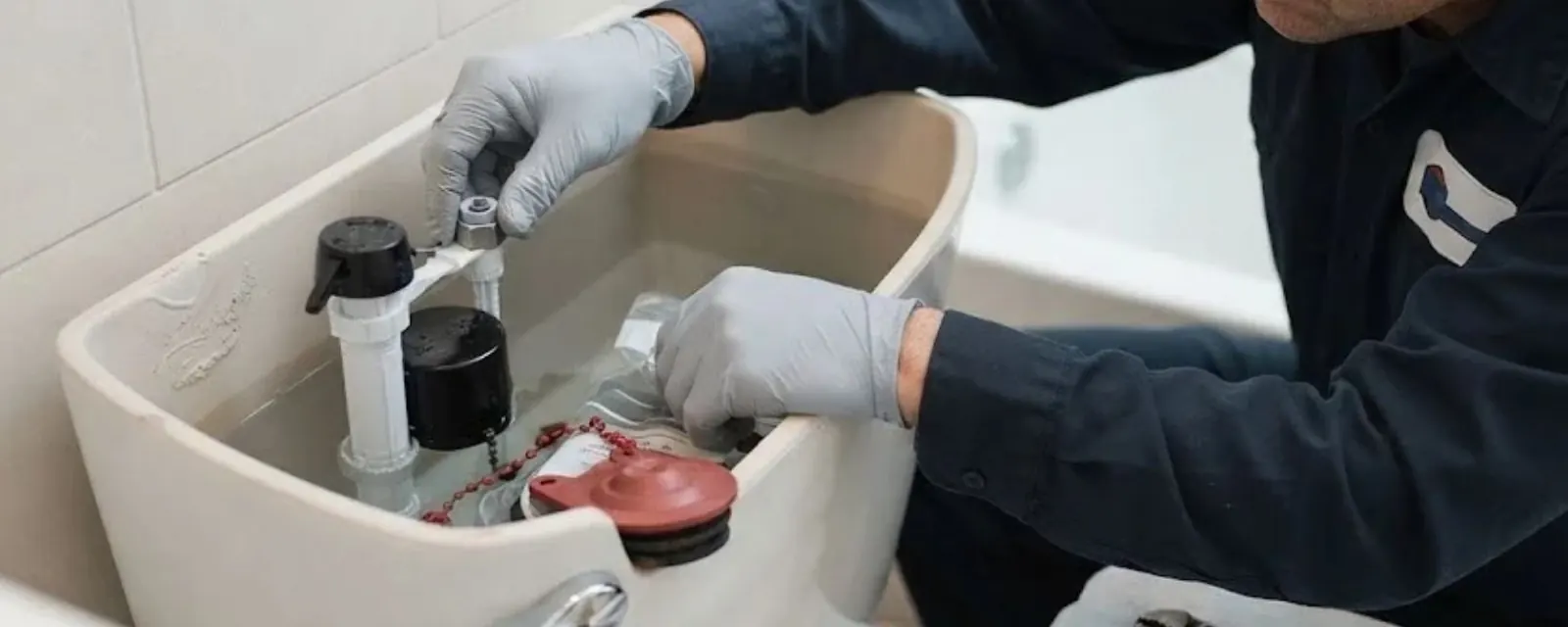
Overflowing or leaking toilet: first steps
What to do when a toilet will not stop
- Lift the tank lid and push the flapper down.
- Close the shutoff valve at the wall.
- Do not flush again if the bowl is rising.
- Towel the floor to protect the subfloor.
- Switch off power to wet outlets.
Running toilet: the cheap fix and the expensive habit
A toilet that runs between flushes wastes water and raises your bill. The flapper that seals the tank is a rubber part, and rubber wears out. The City of Huntsville's water quality report lists chloramines as its disinfectant, and many plumbers see rubber parts age faster in chloraminated water, so a flapper replaced every few years is normal.
A fill valve that will not shut off, a chain that is too long or short and a cracked overflow tube cause the same symptom. Try the dye test, which is a few drops of food coloring in the tank. If color shows in the bowl without a flush, the flapper is leaking.
Leaks at the base and rocking toilets
Water around the base means the wax ring, the seal between the toilet and the drain flange, has failed or the flange is cracked or sits too low. Rocking toilets stress the ring and the floor under it. Left alone, the leak can rot the subfloor.
A plumber pulls the toilet, replaces the wax ring, inspects the flange and resets the toilet with new bolts. If the floor is soft, tell the dispatcher. Related fixture work, such as a stuck shutoff valve, is covered under faucet and valve repair.
Clogged toilets and when it is more than a clog
A plunger clears most single toilet clogs. If the bowl rises when you flush and then slowly drops, or if the tub gurgles when you flush, the blockage is past the toilet. That is a drain or sewer problem, and drain cleaning is the next step.
A closet auger reaches deeper than a plunger and can retrieve objects. Plumbers also check for a cracked toilet trap or a clog in the vent, which is why a fixture that clogs repeatedly deserves a visit.
Repair or replace the toilet
| Condition | Usual choice | Reason |
|---|---|---|
| Running, leaking flapper or fill valve | Repair | Parts are inexpensive. |
| Leaking base seal | Repair | New wax ring and bolts. |
| Cracked bowl or tank | Replace | Porcelain cannot be repaired reliably. |
| Older high-flow toilet wasting water | Consider replacing | Modern toilets use much less water per flush. |
What a toilet repair costs depend on
Water damage from a sudden overflow may be covered by home insurance, while a long-term leak usually is not. Call for a price on your toilet.
Flange height, closet bolts and fixture clearances are set out in the International Plumbing Code (IPC), the plumbing code the City of Huntsville lists at its 2024 edition.
Toilet repair questions
Yes. The 24/7 line takes overflow and leak calls any hour. Shut the valve behind the toilet and call.
A worn flapper or a fill valve that will not shut off is the usual cause. Both are inexpensive parts.
Water around the base, a rocking toilet or a smell of sewage near the floor suggests a failing seal.
Weak flush, a partial clog downstream or too much paper can cause it. If other fixtures gurgle, the line is the issue.
If it is cracked or wastes water, yes. A working older toilet with a worn part can often be repaired.