
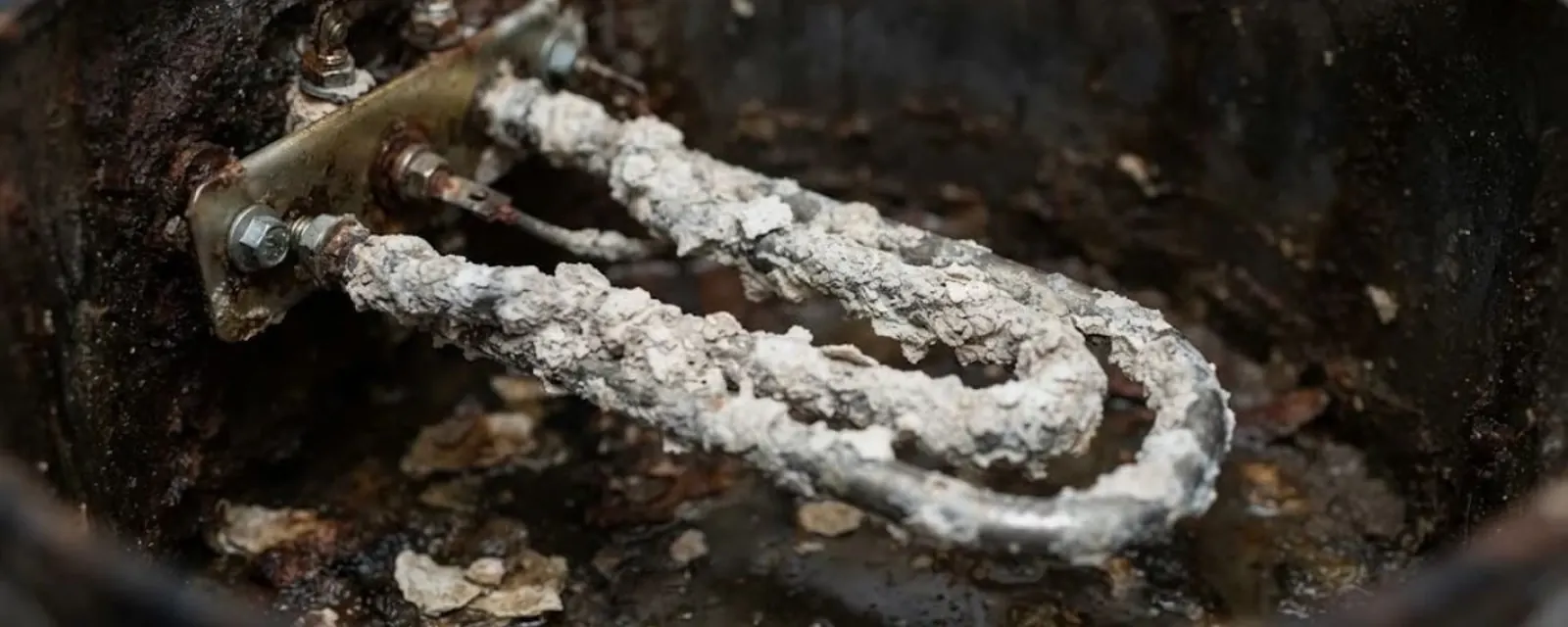
How an electric water heater heats water
Most electric tank heaters have two elements, one near the top and one near the bottom, each controlled by a thermostat. The upper element heats the top of the tank first, then the lower element keeps the rest hot. If one fails, the heater still makes some hot water, which is why the symptom is often a weak shower and not a cold one.
A breaker that trips repeatedly, a reset button that keeps popping and water that is hot for a few minutes then cold all point to an electrical fault in the heating system.
- Water is warm but never hot.
- Hot water runs out much faster than before.
- Reset button trips again and again.
- Breaker for the heater keeps tripping.
- Water is hot for a short time and then cold.
What to do before you touch the heater
- Switch off the breaker and confirm power is off.
- Close the cold inlet before draining.
- Let the tank cool.
- Do not restore power until the tank is full.
- Call a plumber if a wire is burned or the tank leaks.
Element, thermostat or tank?
Always switch off the breaker before opening any access panel. Testing an element takes a meter and a plumber or electrician comfortable around live circuits, so this is not a repair to guess at.
| Symptom | Likely cause | Typical fix |
|---|---|---|
| No hot water at all | Tripped breaker, failed upper thermostat or element | Reset, test, replace the part. |
| Lukewarm water | Failed lower element | Replace the element. |
| Water runs out quickly | Failed lower element or heavy sediment | Replace the element and flush the tank. |
| Water at the base of the tank | Leaking tank or fitting | Check the fitting, replace the heater if the tank leaks. |
What the replacement involves
- Turn off power at the breaker and confirm it is off with a tester.
- Close the cold inlet and drain part or all of the tank, depending on the element location.
- Remove the access panel, disconnect the wires and unscrew the old element with an element wrench.
- Fit the new element with a fresh gasket, refill the tank, purge the air and restore power only when the tank is full.
Why elements fail
Scale is the main cause. Minerals settle on the lower element and insulate it from the water, so it overheats and burns out. A tank that runs dry while power is on can also destroy an element in minutes. Both are avoidable with a yearly flush and by switching off power whenever the tank is drained.
The City of Huntsville's report gives no hardness figure, so test your own tap or ask the utility. If the water is hard, expect scale and plan for more frequent flushing. Our water softener and filtration page explains testing.
Safety points that matter
- Switch off the breaker and confirm power is off before opening a panel.
- Never run the heater with an empty tank.
- Let the tank cool before draining it.
- Use the right tool, since a stripped element is a bigger repair.
- Keep water away from exposed wiring.
Repair or replace the heater?
An element swap makes sense on a heater that is not very old and has no leaks. If the tank is near the end of its typical lifespan, or you see rust at the base, spending money on a part may only delay a failure. A tank that leaks cannot be repaired.
Our water heater repair page covers how a plumber decides, and water heater replacement explains what a new unit involves. Heaters in Riverside and New Waverly homes are treated the same way.
Keeping a new element alive
Flush the tank yearly to remove sediment. Do not set the thermostat higher than needed. Check the anode rod every few years, since a depleted rod lets the tank corrode. If you drain the tank for any reason, refill it fully before restoring power.
A local note on permits
The City of Huntsville states that plumbing work must be handled by individuals licensed by the state of Texas, and that a permit is required for new plumbing systems and for water or waste piping replacements. A simple element swap is routine service, but replacing the whole heater may involve a permit, so ask the City of Huntsville permit office or let a licensed plumber handle it.
A heater's temperature and pressure relief valve is a requirement of the International Plumbing Code (IPC), which the City of Huntsville lists at its 2024 edition.
Source type: City of Huntsville permit information
Heating element questions
It is possible for a skilled person, but it involves live electricity and a full tank of hot water. Many people choose a plumber.
Many take one to two hours including draining and refilling.
Often one fails first, and some plumbers replace both if the unit is older. Ask what the tests show.
A shorted element is a common cause. Do not keep resetting it. Call for a test.
Yes. The 24/7 line takes calls for no hot water any hour.