
What to decide before you buy
Disposals are rated by motor size. A smaller motor suits light use and a larger one handles heavy use and a family. Continuous feed units run as long as the switch is on. Batch feed units run only when a stopper is in place, and some prefer them for safety.
Check the sink first. A disposal needs a standard 3.5 inch sink opening and enough space beneath. Under-sink space matters in a small cabinet where a water filter or dishwasher line also sits.
- Motor size that fits your household.
- Continuous or batch feed.
- Sink opening and cabinet space.
- Dishwasher hookup.
- Power source and switch.
Electrical and plumbing connections
A disposal needs power from a switch or a plug. Hardwired units connect to a wall switch, and plug-in units use a receptacle under the sink. Whichever applies, power must be off at the breaker while you work. If there is no existing circuit or switch, an electrician must add one.
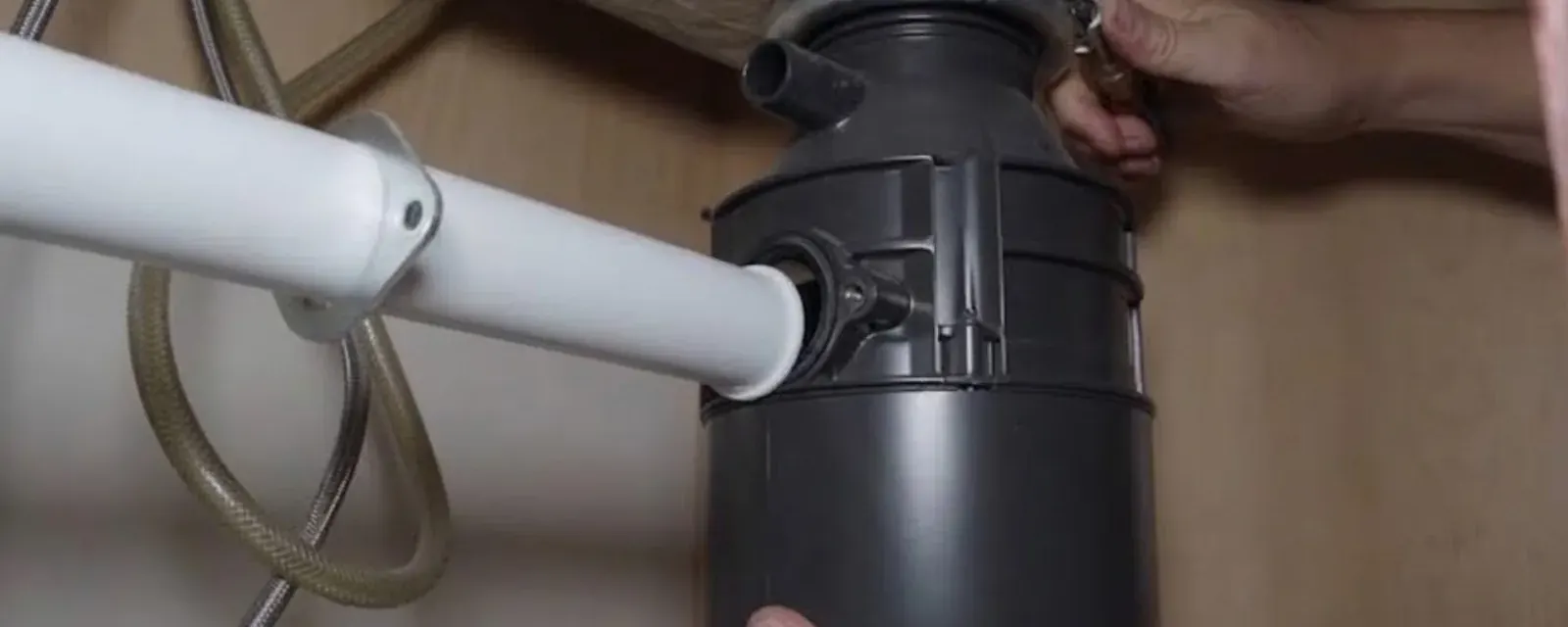
On the water side, the disposal drains into the trap. A dishwasher drain connects to a port on the disposal, and that port has a knockout plug that must be removed when a dishwasher is connected. Forgetting this is a classic mistake that sends dishwasher water backing up.
Installation steps
- Turn off power at the breaker and disconnect the old unit or the old strainer.
- Attach the mounting assembly to the sink flange and secure it.
- Wire the disposal and connect the dishwasher drain after removing the knockout plug.
- Mount the unit, connect the discharge to the trap and test with water and power.
Drains, grease and what not to grind
A disposal does not make a drain immune to clogs. Grease hardens in pipes and catches grind. Fibrous foods like celery, potato peels and coffee grounds can bind into a mat. Run cold water during use and for several seconds afterward.
If a disposal keeps jamming or drains slowly, the problem may be the line. Our garbage disposal repair and drain cleaning pages explain the difference.
Septic tank homes
Properties outside city sewer, which include homes near New Waverly and Riverside, may be on septic systems. A disposal adds solids to a septic tank, which then needs pumping more often. Some local septic installers advise against a disposal. Ask yours before you add one.
Common installation mistakes
Each of these is easy to avoid with a careful read of the manual, and each one is a common reason people call a plumber after a first attempt.
- Leaving the dishwasher knockout plug in place.
- Overtightening the mounting ring and cracking the sink flange.
- Skipping plumber's putty under the flange.
- Forgetting to turn power off before wiring.
- Reusing an old, cracked drain gasket.
When to hire a plumber
Hire one if the sink needs new plumbing, if the dishwasher drain is involved or if you want the unit wired. A plumber also checks the trap and drain for slow flow, which a new disposal can expose. See plumbing installation for the wider scope of fixture work.
A local note on the supply
The City of Huntsville reports chloramine at an average of 3.09 mg/L. Chloramine can wear rubber seals, including the splash guard and drain gaskets on a disposal, over the years. Replace a cracked gasket as soon as you see seepage under the sink.
The drain connection under a sink follows the International Plumbing Code (IPC), which the City of Huntsville lists as its plumbing code at the 2024 edition.
Source type: City of Huntsville 2025 Water Quality Report
Garbage disposal installation questions
Many people do, but wiring and the drain connections are where mistakes happen. A plumber can do it quickly.
The knockout plug in the dishwasher port may not have been removed.
Grease and solids add load to older drain lines. Use it lightly if your line has a history of clogs.
Routine fixture swaps usually do not, but ask the City of Huntsville permit office.
Yes. Describe the sink and the plumber will plan the visit.