
Signs of a slab leak
The most common warning is a water meter that moves with everything off. Other clues include warm spots on the floor from a hot line leak, the sound of running water in a quiet house, damp carpet or baseboards, cracks in walls or floors and a sudden drop in pressure.
A single sign may have another cause. Two or three together are worth acting on.
- Meter moves with all fixtures off.
- Warm or hot spots on the floor.
- Sound of water running at night.
- Damp carpet or flooring that lifts.
- Rising water bill with no change in use.
How to check before you call
- Do the meter test with every fixture off and note whether the dial moves.
- Close the main shutoff at the house. If the meter stops, the leak is inside the house line. If it keeps moving, the leak is outside.
- Walk barefoot over the slab to find warm patches, especially near the water heater and bathrooms.
- Listen near walls and floors in a quiet house for running or hissing sounds.
How professional detection works
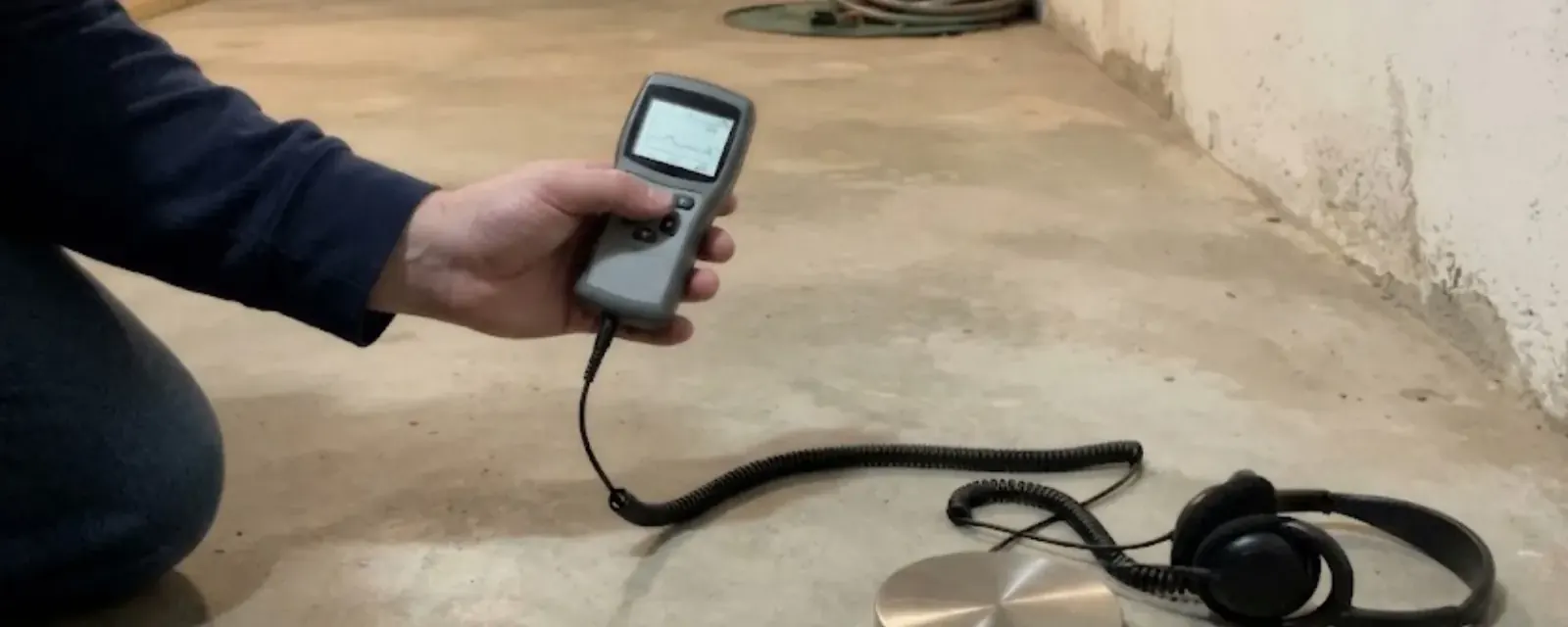
A plumber isolates sections of the line, pressure tests them and uses an acoustic listening device to pinpoint the sound of escaping water on the slab surface. Thermal imaging picks up warm pipe leaks. The goal is to mark the spot within a few feet so only a small area is opened.
The process is described on the leak detection page, and the repair options are on the slab leak repair page.
Repair options
| Option | What it is | Fits when |
|---|---|---|
| Spot repair | Break the slab at the leak and fix the pipe | One accessible leak. |
| Reroute | Run a new line through the attic or walls | Several leaks or a failing line. |
| Repipe | Replace the whole supply system | Old, failing pipe throughout. |
Hot water versus cold water leaks
A hot line leak is easier to feel, since the slab warms above the pipe. A cold line leak is quieter and often shows only on the bill or as a damp patch. If the water heater runs more than usual, a hot line leak is a good suspect.
Plumbers can isolate hot and cold lines separately with pressure gauges, which is the first step in narrowing the search.
Why slab leaks happen
Soil movement, corrosion and the age of the pipe all play a part. The Texas State Historical Association describes Walker County soils as sands and clays. Clay shrinks and swells with the weather, which can move a slab slightly and stress pipes under it. Water chemistry matters too, and pipe condition is a separate question from the city's measurements.
If leaks keep returning in different spots, see repiping for options.
Questions to ask before a slab is opened
- How precisely was the leak located.
- Is a reroute cheaper than breaking the slab.
- Who restores the flooring afterward.
- Is a permit needed for this work.
- What warranty comes with the repair.
Next steps and coverage
Close the main if you are away, photograph any damage and keep your bills. Insurance policies differ on slab leaks, so ask your agent whether the repair and the access cost are covered. We serve Huntsville, New Waverly and Riverside around the clock.
A local note on copper and corrosion
The City of Huntsville's 2025 report shows copper at 0.415 ppm at the 90th percentile, below the 1.3 ppm action level. That figure measures corrosion of household plumbing across the sampled homes and says nothing about the pipe under your slab, which is why a pressure test on your own system is the real answer.
Piping under a slab has its own protection and testing rules in the International Plumbing Code (IPC), which the City of Huntsville lists at its 2024 edition.
Source type: City of Huntsville 2025 Water Quality Report
Slab leak detection questions
A moving meter with fixtures off, warm floor spots and unexplained damp flooring are the common signs.
Yes. Listening and thermal tools locate it before any opening is made.
It can run for a long time unseen, which is why the bill matters.
An active leak should be handled promptly. Close the main and call.
Yes. The 24/7 line dispatches a plumber.